What Makes a Ceiling Speaker Worth Choosing?
A ceiling speaker is worth choosing when it improves the room without creating new problems. That means clear, balanced sound at the listening position, enough coverage for the space, and a design that fits the ceiling rather than drawing attention to itself. A low price alone is not a useful measure if the speaker sounds thin, requires difficult installation, or fails in a humid location.
Compare more than advertised wattage. Pay attention to woofer size, tweeter adjustment, frequency range, impedance, and whether the speaker is designed for stereo, television, or surround use. Also account for the parts people often overlook: cutout dimensions, ceiling depth, wiring access, paintability, and the cost of installation. The strongest choice balances sound, coverage, durability, appearance, and total project cost.
Start With the Room, Not the Brand
A speaker that works well in a small office may be a poor choice for an open kitchen or combined living area. Start by measuring the room and noting where people usually sit, work, or watch television. Ceiling height, hard surfaces, furniture, and background noise all affect how evenly sound travels. A compact room may need one strategically placed stereo speaker, while a larger or irregular space often benefits from two or more speakers at lower volume.
Consider the ceiling itself before comparing brands. Standard drywall is usually straightforward, but joists, ductwork, insulation, and limited access can restrict speaker size and placement. Kitchens and bathrooms also require models suited to moisture and temperature changes, while a covered patio demands protection from outdoor conditions. These requirements may narrow the choices or increase the installation cost, but ignoring them can lead to poor coverage, rattling, difficult repairs, or early failure. The room’s layout and construction should therefore determine the speaker type first; brand comparisons become more useful after those basic limits are clear.
How Much Sound Quality Do You Need?
Sound quality matters most when the speaker will be used for focused listening rather than background audio. For casual music, news, or television, a well-balanced two-way speaker with a responsive woofer and adjustable tweeter may be sufficient. If you regularly listen to detailed recordings or want convincing home theater effects, look for smoother treble, stronger bass extension, and better control at higher volume. A larger woofer can help, but it may also require a larger cutout and more ceiling space.
Specifications provide useful clues, but they do not tell the whole story. Frequency range, sensitivity, impedance, and power handling help determine how a speaker will work with an amplifier, while a pivoting tweeter can direct high frequencies toward the seating area. Avoid choosing by maximum wattage alone; an amplifier’s quality and the speaker’s efficiency often matter more in normal use. Better sound may also require a subwoofer, additional speakers, or more careful placement, increasing both equipment and installation costs. Choose the level of refinement that matches how critically you listen, not simply the most impressive specification sheet.
Single Stereo Speakers or Pairs?
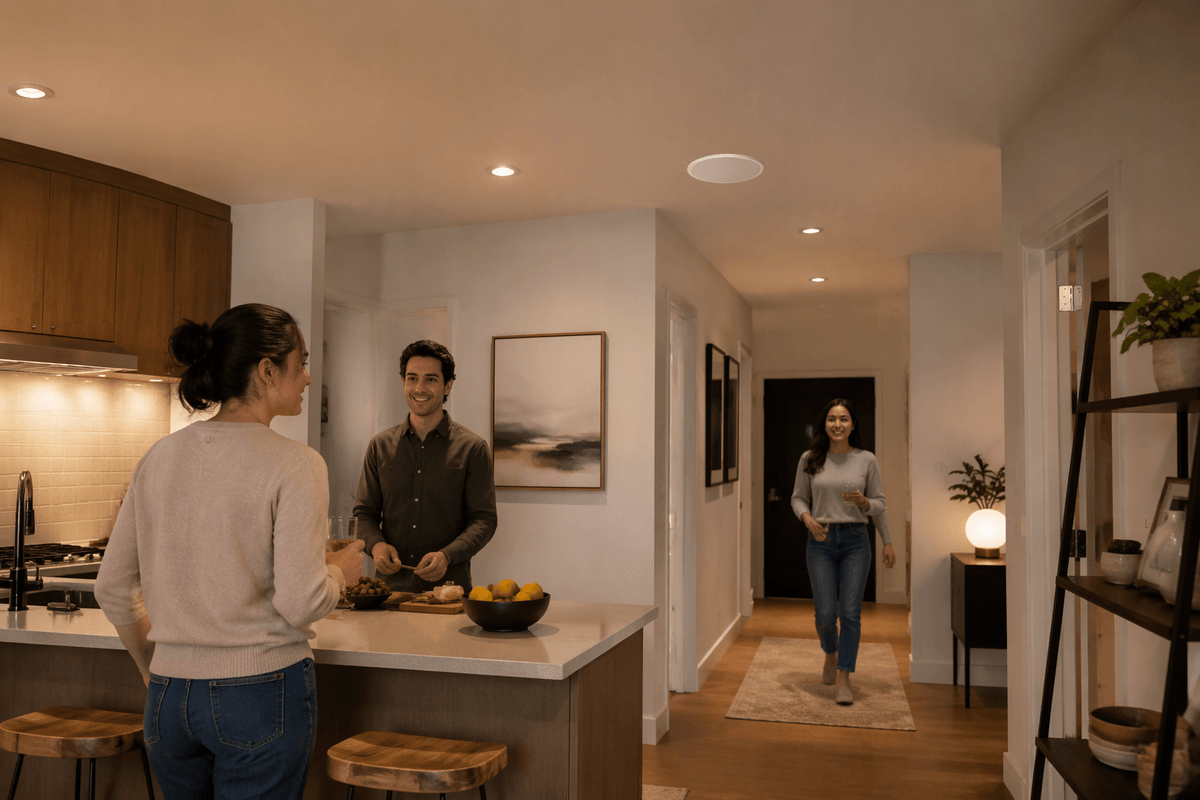
For a small room, a single stereo ceiling speaker can be a practical solution. It contains separate left and right channels in one housing, so it can produce balanced music without installing two cutouts. This works well in bathrooms, hallways, offices, and compact kitchens where listeners move around and precise stereo positioning is less important. Choose a model with dual voice coils and separate tweeters rather than assuming any single speaker can reproduce stereo sound.
A pair of standard ceiling speakers usually delivers a wider, more convincing stereo image because each speaker handles one channel. Place them with reasonable spacing and keep both at similar distances from the main listening area. This arrangement is better for dedicated music listening, larger rooms, and television areas where dialogue and effects benefit from clearer separation. The trade-off is higher equipment and installation cost, plus greater sensitivity to placement. A single speaker may sound uneven if the room is too large, while a poorly spaced pair can create an obvious imbalance. Room shape, seating patterns, and listening priorities should determine the choice.
Installation Details Can Change the Decision
Installation can eliminate an otherwise attractive speaker before sound quality becomes relevant. Check the required cutout diameter, mounting depth, and clearance around the speaker, then compare those measurements with the joist spacing and any wiring, ductwork, or insulation above the ceiling. A model that fits the room acoustically may still be impractical if it cannot clear an obstruction or needs access from above.
Also consider how the speaker will be finished and maintained. Paintable grilles help it blend into the ceiling, but painting them too heavily can reduce the grille’s openness and affect the sound. Sealed or moisture-resistant construction is important in bathrooms, kitchens, and covered outdoor areas, while backer boxes can improve sound control and reduce noise reaching rooms above. These additions may increase the project cost and installation time. If new wiring, ceiling repair, or professional labor is required, compare the complete installed price rather than the speaker’s retail price alone. A simpler model that fits cleanly may be the better choice than a higher-end speaker that creates expensive installation problems.
Matching Speakers to Music and Home Theater
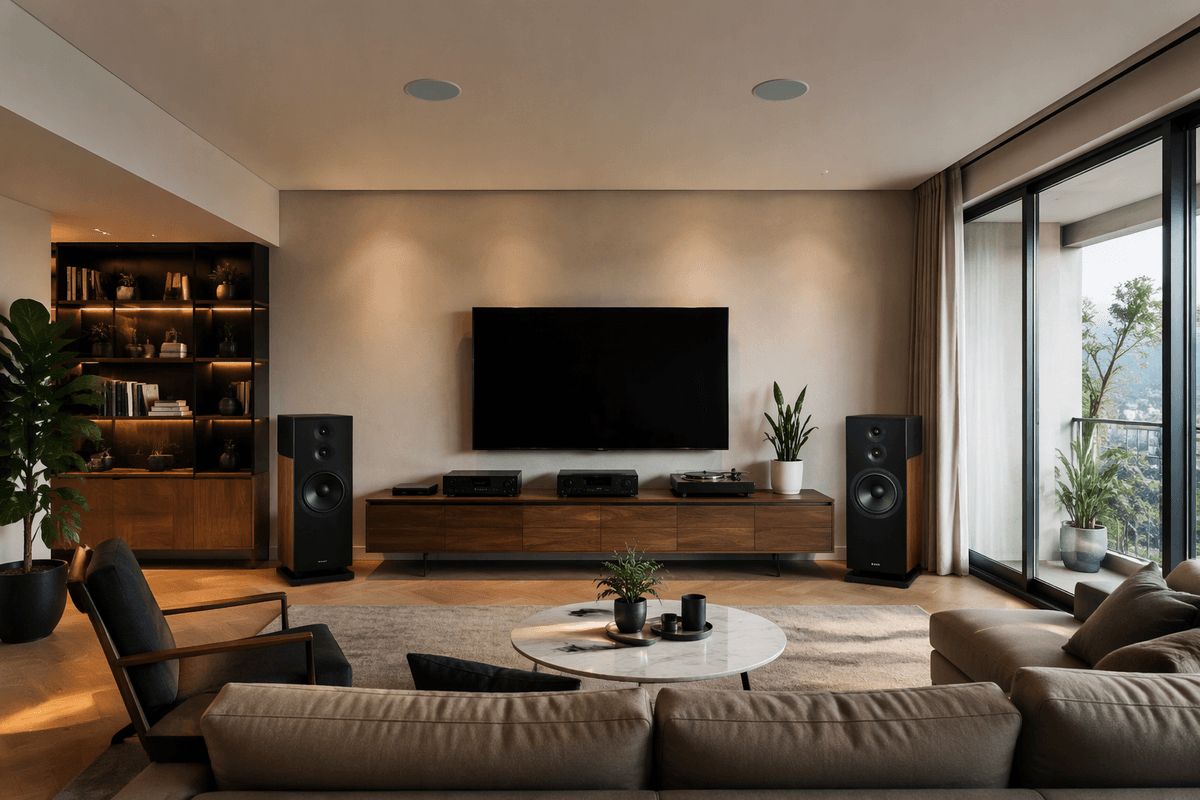
The best ceiling speaker depends on what you expect it to do. For background music, even coverage and a relaxed tonal balance usually matter more than maximum output. In a living room used for focused listening, a matched pair with adjustable or pivoting tweeters can provide clearer stereo imaging. A kitchen or open-plan area may benefit more from several smaller speakers playing at moderate volume, which reduces hot spots and keeps sound consistent as people move around.
Television and home theater introduce different priorities. Speakers near the screen should produce clear dialogue, while ceiling models are often most effective as surround or overhead channels that add spacious effects. They should be matched reasonably with the other speakers in sensitivity and tonal character, and they need an amplifier or receiver that supports the planned number of channels. Ceiling speakers alone rarely deliver convincing low bass, so a separate subwoofer may be necessary for films or demanding music. That adds equipment, wiring, and placement decisions, but it usually improves the result more than choosing a higher-wattage ceiling model.
Choose the Best Fit for Your Ceiling
The right ceiling speaker is the one that satisfies the room’s limits without paying for performance you will not use. For background listening, prioritize even coverage, reliable construction, and easy installation. For focused music or home theater, give more weight to woofer size, tweeter adjustment, tonal matching, and amplifier compatibility. Confirm the cutout, mounting depth, moisture rating, and grille finish before ordering, then estimate wiring, ceiling repair, and labor as part of the total cost.
A carefully chosen midrange model can outperform a premium speaker placed poorly or forced into an unsuitable ceiling. Match the speaker to the room, listening habits, and installation conditions first; use brand reputation and extra specifications to break close ties. That approach produces a discreet system that sounds consistent, lasts longer, and stays within budget.